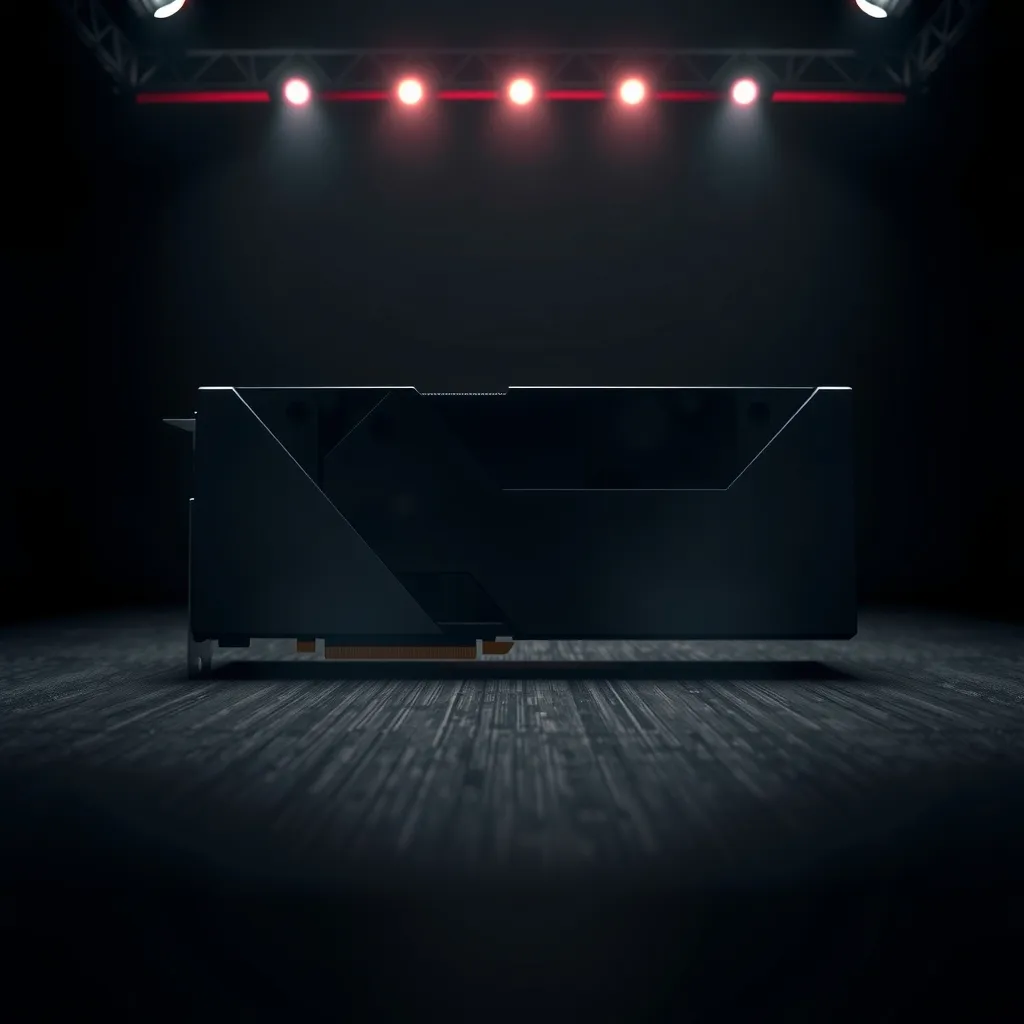
Nvidia’s latest flagship GPU, the RTX 5090, has arrived with promises of groundbreaking performance, but at a price that makes even seasoned enthusiasts pause. Priced at $1,999, this card isn’t just an upgrade—it’s a statement. So, does it live up to the hype, or is it a luxury reserved for the few? We put it through its paces in both gaming and productivity workloads to find out.
Performance: A Leap Forward, But at What Cost?
The RTX 5090 is built on Nvidia’s new Blackwell architecture, featuring 24GB of GDDR7 memory and a 450W TDP. In our tests, it crushed every modern title at 4K resolution, often hitting over 120 FPS in demanding games like Cyberpunk 2077 with DLSS 3.5 enabled. Even in Starfield, a game notorious for its optimization issues, the 5090 delivered smooth 60+ FPS at max settings. The real-world difference between this and the RTX 4090 is noticeable, but not earth-shattering—expect around a 20-30% uplift in most titles, as covered in our guide on high-refresh-rate gaming monitors. For creators, the gains are more substantial. In Blender 3.6, the 5090 completed a complex 3D render in 42 minutes, compared to 58 minutes on the 4090. Similarly, in Adobe Premiere Pro, video export times dropped by nearly 25%. These improvements are impressive, but they come at a premium. If you’re already rocking an RTX 4090, the upgrade may not be worth it unless you’re chasing every last frame or working with massive 8K projects. For those still on older hardware, like an RTX 2080 or GTX 1080 Ti, the jump to the 5090 is transformative. However, the $1,999 price tag means you’ll need a high-end system to support it—think an Intel Core i9-14900K or AMD Ryzen 9 7950X3D, along with a 1000W+ PSU. Pairing it with anything less feels like bringing a sports car to a go-kart track.
Thermals and Power: The Heat is Real
Nvidia has made strides in power efficiency with Blackwell, but the RTX 5090 still demands serious cooling. Under full load, our test unit hit 82°C, which is manageable but loud. The triple-fan cooler does its job, but it’s not silent—expect a constant hum that’s noticeable in quiet rooms. Power draw is another concern. The 5090 pulled up to 500W in synthetic benchmarks, which means your power bill will see a noticeable uptick. If you’re running a high-wattage system, this isn’t a dealbreaker, but it’s something to consider. Thermal throttling wasn’t an issue in our tests, but the card does get hot enough to warrant a well-ventilated case. If you’re using a compact or poorly cooled system, the 5090 might not be the best fit. For those with custom loops or high-end air cooling, however, it’s a non-issue. One of the biggest questions surrounding the RTX 5090 is whether it’s worth the price. At $1,999, it’s not just an enthusiast’s card—it’s a statement. If you’re a professional creator or a competitive gamer chasing every possible frame, it’s a worthy investment. For everyone else, the RTX 4090 still offers excellent performance at a more reasonable $1,599. That said, if you’re building a new high-end system from scratch, the 5090 is the future-proof choice. For more on how the RTX 5090 stacks up against AMD’s latest offerings, check out our AMD Radeon RX 7900 XTX review. And for the official specs and benchmarks, head to Nvidia’s product page. According to Tom’s Hardware, the Blackwell architecture represents a significant leap in ray tracing and AI performance, though efficiency gains remain incremental.