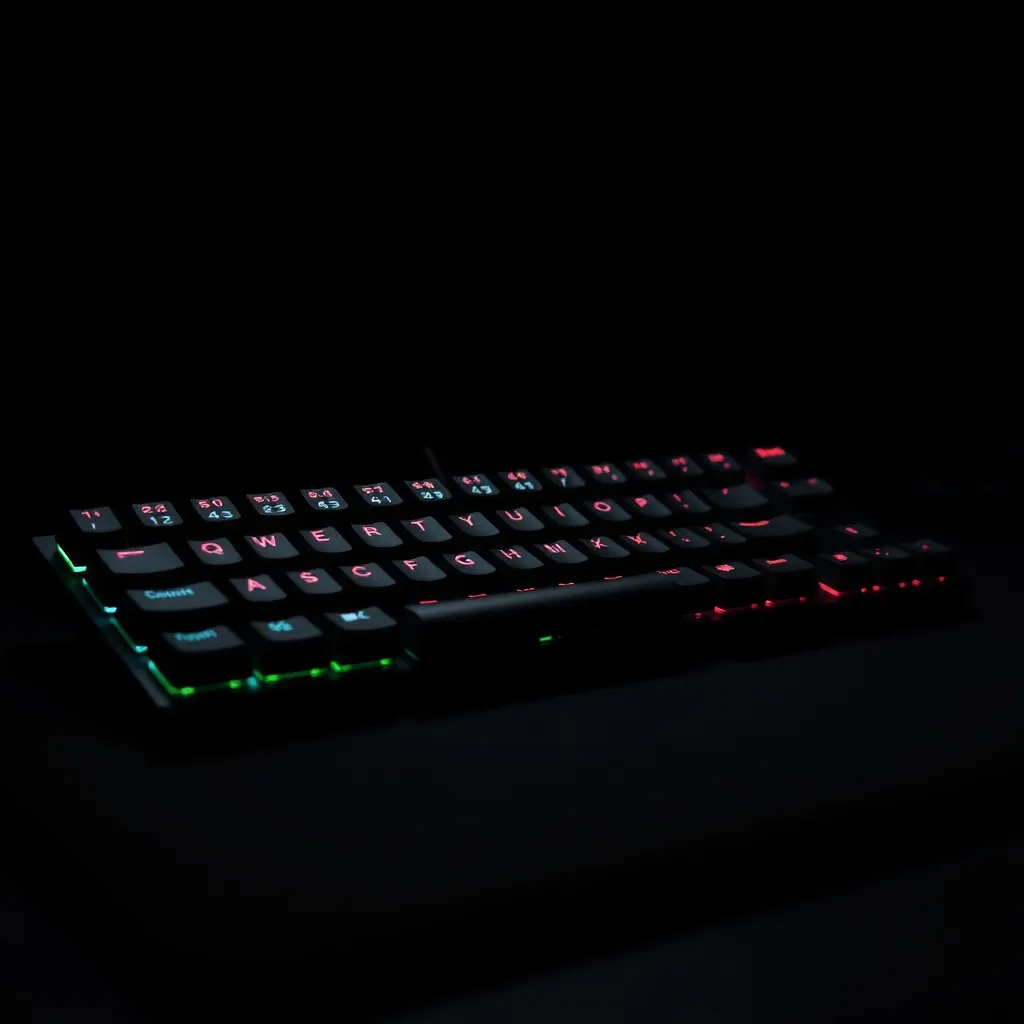
If you've ever spent more than five minutes in a gaming forum, you've likely heard the debate: linear vs. tactile vs. clicky. The truth is, the best mechanical keyboard switch depends entirely on your playstyle, budget, and personal preference. Whether you're a competitive FPS player, a strategy gamer, or someone who just wants a satisfying typing experience, there's a switch out there for you. Let's break down the most popular options and what they bring to the table.
Linear Switches: Smooth and Silent for Fast-Paced Play
Linear switches, like the Cherry MX Red and Gateron Yellow, are the go-to choice for gamers who prioritize speed and consistency. These switches have a smooth keystroke from top to bottom with no tactile bump or audible click, making them ideal for rapid key presses in games like Counter-Strike 2 or Valorant. The Cherry MX Red has a 45g actuation force, which is light enough for quick double-taps but heavy enough to avoid accidental presses. Meanwhile, the Gateron Yellow offers a slightly lighter 35g actuation force, making it a favorite among players who prefer even faster responses. For those willing to spend a bit more, the Kailh Box White provides a unique box design that prevents dust ingress and offers a crisp, snappy feel.
If you're looking for a linear switch that balances performance and durability, consider the Outemu Red. These switches are often found in budget-friendly keyboards and offer a consistent 35g actuation force. However, they lack the premium build quality of Cherry or Gateron switches, so they may wear out faster under heavy use. For a more premium experience, the Zealios V2 from ZealPC delivers a smooth keystroke with a slightly heavier 67g actuation force, perfect for players who want a bit more resistance without sacrificing speed. If you're curious about how these switches perform in high-end setups, check out our RTX 5090 Review: Is the Flagship Worth the Upgrade Price for insights on premium gaming hardware.
For gamers who want to dive deeper into the world of linear switches, check out our guide on Best Mechanical Keyboards for Gaming in 2025 to see how different switches perform in full keyboard setups.
Tactile and Clicky Switches: Feedback and Satisfaction
If you prefer a switch that gives you physical feedback with every press, tactile switches like the Cherry MX Brown and Kailh Box Jade are excellent choices. These switches feature a noticeable bump at the actuation point, which helps prevent accidental key presses and provides a satisfying typing experience. The Cherry MX Brown is one of the most popular tactile switches, with a 45g actuation force and a subtle bump that's neither too light nor too heavy. It's a versatile option that works well for both gaming and typing.
The Kailh Box Jade, on the other hand, offers a heavier 50g actuation force and a sharper tactile bump, making it a favorite among players who want more pronounced feedback. For those who love the sound of a mechanical keyboard, clicky switches like the Cherry MX Blue and Kailh Box Navy deliver a crisp click with every keystroke. The Cherry MX Blue is a classic choice with a 50g actuation force, while the Kailh Box Navy offers a heavier 60g actuation force and a louder click, perfect for players who want to announce every action in-game.
While clicky switches can be incredibly satisfying, they're not ideal for competitive gaming due to their noise levels. If you're gaming in a shared space, consider using a keyboard with o-rings to dampen the sound or opt for a quieter tactile switch like the Glorious Panda. These switches offer a tactile bump similar to the Cherry MX Brown but with a heavier 67g actuation force, providing a more pronounced feedback without the noise. For a deeper understanding of switch mechanics, Cherry MX’s official documentation remains the most authoritative resource available.
For the most accurate and up-to-date information on mechanical keyboard switches, always refer to the official specifications from the manufacturers.